
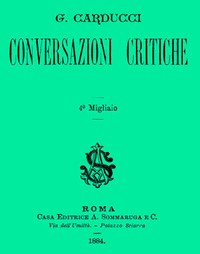
Conversazioni critiche by Giosuè Carducci
Before we dive in, let's clear something up: Conversazioni critiche (Critical Conversations) isn't a novel or a story in the traditional sense. Think of it as a curated collection of Giosuè Carducci's most pointed and influential essays and lectures. Carducci, who would later win the Nobel Prize in Literature, was a towering figure in 19th-century Italy, and this book captures him in his element—as a critic, historian, and fierce advocate for a new national culture.
The Story
There's no plot, but there is a powerful through-line: Carducci's mission to rebuild Italian literature. Italy had recently unified as a country, but its cultural identity was fragmented. Carducci saw two problems: a stale, overly ornate poetic tradition and new, sentimental trends he considered shallow. In these essays, he goes to war on both fronts. He champions a return to the clear, strong models of Italy's ancient and Renaissance past, like Dante and Petrarch, but he wants to use that foundation to create something vigorous and modern. He analyzes other writers, dissects literary movements, and argues for a poetry connected to real life, history, and national spirit. The 'story' is the drama of his intellectual fight to clear the ground and plant the seeds for a truly great Italian literature.
Why You Should Read It
You should read this to meet the mind behind the myth. We often see historical figures as statues, but here Carducci is all fire and opinion. His passion is contagious. Even when you might disagree with his sometimes harsh judgments, you can't ignore his deep erudition and his genuine love for his country's artistic soul. It’s fascinating to see how a nation's aesthetic values are forged—through debate, strong preferences, and a lot of conviction. Reading these essays feels less like homework and more like listening in on a brilliant, slightly cantankerous scholar hold court. You get a direct line to the cultural debates that were heating up salons and newspapers in the 1800s.
Final Verdict
This book is a specialist's treasure, but it has wider appeal for the right reader. It's perfect for history buffs or literature students curious about the mechanics of the Italian Renaissance's legacy. It's also great for anyone who lives for spirited cultural commentary—think of it as the 19th-century version of a great critic's column. A general reader looking for a narrative won't find it here. But if you're up for a challenging, rewarding journey into the mind of a cultural architect, Conversazioni critiche offers a thrilling and unique perspective. Just be ready for a guide who is never, ever boring.
Jackson White
9 months agoA bit long but worth it.
Logan Ramirez
2 months agoA must-have for anyone studying this subject.
Oliver Gonzalez
10 months agoClear and concise.








Kevin Martinez
1 month agoWow.