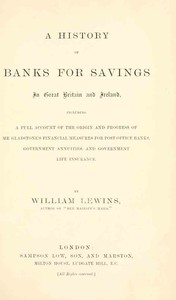
A History of Banks for Savings in Great Britain and Ireland by William Lewins
So, what's this book actually about? William Lewins, writing in the 1860s, acts as our guide through the early 1800s, a time of massive industrial change and deep poverty. He shows us how a powerful idea took root: that encouraging the working class to save small amounts could fight poverty and create stability.
The Story
The ‘plot’ follows the birth and growth of savings banks. It starts with the first pioneers—often clergymen or philanthropists—who set up local trustee savings banks. Lewins walks us through the practical challenges: finding a secure room, getting trustworthy volunteers, and convincing skeptical workers that their shillings would be safe. The real drama comes from the push for government backing. Lewins details the political arguments and the eventual laws that gave these banks a solid foundation. He takes us on a tour across England, Scotland, Wales, and Ireland, showing how the movement adapted to different communities, making it a truly national story built from countless local efforts.
Why You Should Read It
What grabbed me was how human this history is. It’s easy to think of banks as cold, impersonal institutions. Lewins reminds us they started as a community service. You meet the vicar using his parish house as a vault and the factory workers lining up on payday. It reframes banking as a tool for empowerment, not just finance. Reading it now, in our world of online banking and financial apps, it’s a powerful reminder of how radical and essential the basic concept of a safe savings account once was. It makes you appreciate the infrastructure of trust we barely think about.
Final Verdict
This isn't a light read, but it’s a rewarding one. It’s perfect for history buffs who love social history—the stories of everyday life—over military or political tales. If you’re interested in economics, this is the origin story of a key part of our system. Most of all, it’s for the curious reader who enjoys discovering the hidden stories behind ordinary things. You’ll never look at your bank statement the same way again. Just be ready for its 19th-century style; give yourself a chapter to settle into its rhythm.